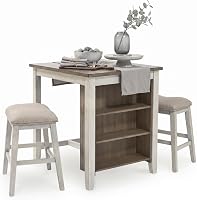
Counter Height vs Standard Dining Tables: Which Is Better? (October 2026)
Choose a standard dining table for familiar seating and broad chair options; choose counter height for a raised feel and a built-in footrest. Your room, mobility and preferred chairs matter as much as the look.
On this page (8 sections)
- Counter height vs standard dining tables: which height fits your routine?
- How do the heights affect chair fit?
- Which table height is easier for a mixed household?
- Does one height work better in a small room?
- Which table is better for shared meals and work?
- What should you measure before choosing?
- Which height should you choose?
- Sources
Choose a standard dining table for familiar seating and broad chair options; choose counter height for a raised feel and a built-in footrest. In the counter height vs standard dining tables decision, the right fit depends on who sits there, which chairs you own and how the table fits your room.
Standard tables are commonly about 28 to 30 in high. Counter-height tables are typically about 34 to 36 in, so they need taller chairs or stools.
These options show the difference: the BERRY NEST farmhouse table is 30.51 in high, while the Signature Design by Ashley and Tribesigns counter-height tables are 36 in and 35.43 in. The height affects getting in and out, reaching food and how the table looks in the room.
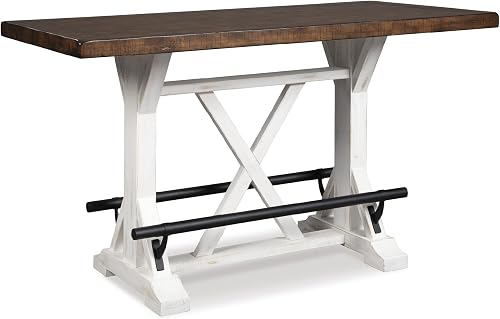 Best for a compact farmhouse nook
Signature Design by Ashley Farmhouse Counter Height Table, White
 Best for standard family meals
Farmhouse Rectangle Dining Table for 6, Oak
Counter height vs standard dining tables: which height fits your routine?
Standard height suits everyday meals with conventional dining chairs; counter height suits people who prefer a raised seat and matching stools. Consider comfort at every meal, not just the first impression.
A lower seat can be easier to use for children and guests of different heights. It also gives you a wider choice of ordinary dining chairs, including chairs you may already own.
A counter-height table creates a more upright seating position and often has room for a footrest. That can be comfortable for some people, but climbing onto a taller stool is not as easy for everyone.
If you're still choosing the overall table, our guide to how to choose a dining table covers size, shape and wood. For height measurements and seat fit, see how tall a dining table should be.
How do the heights affect chair fit?
Match the chair seat to the table height, leaving enough space for your legs beneath the top. A chair that looks right in a photo can still leave you sitting too low or cramped.
Standard dining chairs are made for tables around 28 to 30 in high. Counter-height tables need taller seating, often sold as counter stools or counter-height chairs.
Don't confuse counter stools with bar stools. Bar-height seating is usually taller, so it may leave your knees far below the surface or place your arms at an awkward angle.
Before you buy, measure the seat height of chairs you plan to use and compare it with the table. Check for footrests and armrests too, since either can affect comfort or whether a chair can tuck under the table.
What chair height works with counter height vs standard dining tables?
A standard table usually pairs with a dining chair; a counter table needs a taller seat. Use each table's exact dimensions to confirm the fit rather than relying on the product name.
The BERRY NEST table measures 30.51 in high, close to standard dining height. The two counter-height options sit higher, at 35.43 and 36 in.
The Ashley table includes a black metal footrest, as does the Tribesigns table. A footrest can give your feet somewhere to rest when they don't reach the floor, but it doesn't replace checking the seat height.
Which table height is easier for a mixed household?
Standard height is the safer starting point when children, guests or people with limited mobility use the table. A raised seat can work well, but getting on and off it takes more effort.
Children may find a standard chair easier to climb onto and sit in securely. With a taller stool, they may need closer supervision, especially if it has no back or arms.
Think about who will use the table every day, not only who lives in the home. If you often host guests, standard seating is familiar and easier to match across a group.
A counter-height table can still work for a household that likes taller seating and can use it safely. Try the seat height before committing when comfort or mobility is uncertain.
Does one height work better in a small room?
Neither height automatically saves floor space; compare the tabletop footprint and the room needed to sit down. Stools may slide under some tables, but you still need space to pull them out and walk around them.
The Ashley counter-height table measures 30 x 60 in. Its compact footprint may suit a breakfast nook, but measure your available floor area and chair positions before deciding.
The standard-height BERRY NEST table measures about 70.08 x 30.71 in, so it takes more length than the Ashley. Its lower height does not make that longer tabletop disappear.
Mark the table dimensions on the floor with tape. Then mark where the chairs or stools will sit when someone is seated, and check that doors and walkways remain usable.
For clearance guidance, see how much space to leave around a dining table. If your room is tight, our guide to kitchen tables for a small space can help you weigh shape and seating too.
Which table is better for shared meals and work?
Choose the surface and seating that fit the tasks you do most often. Standard dining height suits meals and seated work with common chairs; a taller table can feel more like a kitchen island or gathering spot.
The BERRY NEST table is described for 4 to 6 people and measures about 70 in long. Its rounded corners and oak-color finish may suit a family dining area, though you should still confirm that your chosen chairs fit.
The Ashley table is 60 in long and 30 in wide. Its farmhouse finish and metal footrest suit a smaller raised dining area, while the narrow width may limit how much you can place across the top.
The Tribesigns table is nearly 63 in long with a 31.49 in depth. Its metal frame, brown top and footrest give it an industrial look that may also suit a home bar.
What should you measure before choosing?
Measure table height, available floor space and the seat height of chairs you want to use. Those three checks prevent the most common mismatch.
Measure from the floor to the underside of the tabletop as well as to its top. The space beneath the table matters if your chairs have arms or if diners need extra knee room.
Measure the room with chairs pulled out. Allow a clear path for people to sit down, stand up and pass behind them.
If you have a specific number of diners, check the tabletop length and width against their place settings. Our guide to table sizes for 6 people explains how seating count and table dimensions relate.
Which height should you choose?
Pick standard height for easy chair matching and familiar seating; pick counter height if you prefer a raised surface and can use taller seats comfortably. Measure the room and test the seat fit before you settle on either.
The standard-height BERRY NEST table is the more natural fit for everyday family meals with conventional chairs. The Ashley and Tribesigns options suit a counter-height setup, with integrated footrests that offer a place for your feet.
For a compact farmhouse nook, consider the Ashley table. For a longer standard-height surface, consider the BERRY NEST table; for an industrial look with a footrest, consider Tribesigns.
Sources
- U.S. Access Board: dining surfaces and counters
- U.S. Access Board: dining surfaces and work surfaces
Frequently asked questions
What is the difference between counter height and standard dining tables?
Counter-height tables are usually around 34 to 36 inches tall, while standard dining tables are commonly around 28 to 30 inches. Check the exact table height and the seat height of your chairs, since a small mismatch can make meals uncomfortable.
Are counter-height tables harder to get in and out of?
They can be, especially for children, older adults or anyone who finds high seats difficult. Standard dining chairs are lower and often easier to sit on and leave.
If mobility is a concern, try the seat height in person or choose a standard-height table.
Can I use regular chairs with a counter-height table?
Regular dining chairs are generally too low for a counter-height table. Match the chair or stool seat to the table, leaving enough room for your thighs and a comfortable reach to the tabletop.
Check both measurements before buying.
Does a counter-height table save space?
Not by height alone. A compact counter-height table may fit a nook, but its footprint and the space needed to pull out stools still matter.
Measure the table area and walking paths, then compare those measurements with a standard-height option.
Is counter height the same as bar height?
No. Counter-height tables are generally lower than bar-height tables, though exact dimensions vary by model.
Compare the published table height with the seat height you need, and see our guide to counter height vs bar height tables for a closer comparison.