How to Choose a Dining Table: Size, Shape and Wood
Choose a dining table by measuring your room, counting regular diners, and matching the shape and material to your daily use. Leave room to pull out chairs, then compare solid wood, engineered wood and finishes against your care preferences.
On this page (7 sections)
- How do you choose the right dining table size?
- Which dining table shape fits your room?
- Which wood and tabletop material should you choose?
- How do height and base design affect comfort?
- What other features deserve a close look?
- How do you narrow your choices to one table?
- What should you remember when choosing a dining table?
To choose a dining table, measure your room, count the people who usually eat together, and select a shape and material that suit daily life. Check the full table footprint with chairs pulled out before deciding that a size will fit.
A table that works for holiday guests may take up too much room every day. Consider how often you host, whether you need extra seating sometimes, and how much time you want to spend caring for the surface.
This guide covers sizing, shape, wood, height and practical features. For specific options, compare our best kitchen tables for everyday family meals and best kitchen tables for a small space.
How do you choose the right dining table size?
Choose a table around your regular number of diners, then check that the room still has space for chairs and paths around it. Measure the available area before shopping, including nearby cabinets, doors and traffic routes.
Use painter's tape to mark the table's approximate length and width on the floor. Add the chair area around the outline, then walk through the room and pull out imaginary chairs to spot pinch points.
| Regular use | Starting point |
|---|---|
| Daily meals for 2 to 4 | Compact round or rectangular table |
| Daily meals for 4 to 6 | Medium table with enough chair clearance |
| Larger gatherings now and then | Extendable table or drop-leaf design |
| Long, narrow dining area | Rectangular table sized to the room |
These are planning cues, not seating guarantees. Chair width, table legs and place settings all affect how many people can sit comfortably.
Don't choose by the advertised seat count alone. Check the dimensions and the space available at each place setting, especially if you use wide chairs or want room for serving dishes.
For a six-person layout, see what size dining table seats 6 people. If chair movement is your main concern, use our guide to how much space you need around a dining table.
What should you measure before buying?
Measure the room, table, chair pullback area and delivery route. A table can fit on paper yet block a doorway or feel cramped once chairs are in place.
Write down the dining area's length and width, then mark fixed obstacles such as radiators, cabinets, islands and door swings. Note where people walk between the kitchen and other rooms.
Measure the chairs you plan to use from the table edge to the back of the chair when someone is seated. Make sure there is room to move behind that chair if the route is used often.
Check the table's height as well as its top dimensions. A standard dining chair and table should pair comfortably, but seat height and apron clearance can vary.
Finally, measure the route into the home. Include narrow hallways, corners, stair turns and door openings, and check whether the top or legs need assembly.
Which dining table shape fits your room?
Choose a shape that fits the room's outline and leaves clear paths to the seats. Round tables suit some compact or square rooms, while rectangular tables often make better use of longer spaces.
When is a round table a good choice?
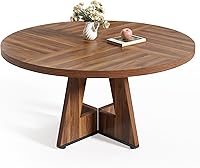
A round table can work well when you want people to face one another and prefer a top without corners. A pedestal base may also leave more open space for legs than a table with corner legs, but check the base dimensions and chair positions.
Round tops can be harder to place against a wall, and larger diameters may reach into walkways quickly. Measure the full circle and chair area rather than estimating from the top alone.
A round shape isn't automatically best for every small room. Compare the footprint with a rectangle, and read round vs rectangle dining table for more layout trade-offs.
When does a rectangular table make more sense?
A rectangular table can suit a long room, a wall-side layout or a household that needs seats along both long edges. It also gives you a clear way to compare table length with the dining area.
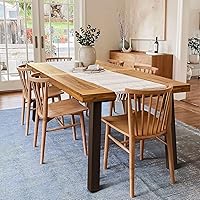
Check the leg layout before choosing chairs or a bench. The Plank+Beam table has a trestle base, so consider where the supports sit and whether they could affect seating positions.
A wide rectangle may feel imposing in a narrow room. Measure the chair pullback zone at both long sides and at the ends before settling on its length.
Should you choose a drop-leaf or extendable table?
Choose a drop-leaf or extendable table when you need a smaller everyday footprint with occasional extra surface area. Compare its compact and expanded dimensions, and decide where leaves will go when they're not in use.
The East West Furniture Dublin table has two drop leaves, but its listed dimensions give a 42 in length in both collapsed and extended fields. Confirm how the leaves affect the setup you plan to use before relying on a particular footprint.
The Mxtxmy table also has a 20.55 in storage shelf under its cross-shaped base. Make sure the shelf and base leave enough room for diners' legs and the chairs you intend to use.
A folding design adds moving parts and a storage question. Check how it expands, where its leaves fit, and whether you can comfortably change the setup without shifting other furniture.
For more compact dining options, see best drop-leaf tables that fold down when not in use.
Which wood and tabletop material should you choose?
Choose material by weighing appearance, construction and the care you can keep up with. Product descriptions may use terms such as solid wood, engineered wood, MDF and veneer, so check what the top and base are made from.
Solid wood has natural grain variation and can suit buyers who want a wood surface throughout. Construction and finish still matter, and solid wood can respond to changes in humidity, spills and scratches.
Engineered wood uses manufactured wood components. MDF is one kind of engineered wood, and a tabletop's surface finish affects how it looks and how you should clean it.
Veneer is a thin layer of wood over a core material. It can give a table a wood-grain look, but care and repair options depend on the veneer thickness and finish.
The Plank+Beam table is described as solid wood with non-toxic finishes. Its wirebrush finish gives the surface a textured look, so consider whether that finish matches your room and cleaning habits.
The Mxtxmy table's surface is described as easy to clean with a gentle wipe using a damp cloth. Follow care instructions for the table, and avoid assuming that a water-resistant surface is waterproof.
For a deeper material comparison, read solid wood vs veneer dining table and our guide to the best wood for a kitchen table.
What finish works for everyday meals?
Choose a finish that fits your cleaning routine and the marks you can live with. A darker stained top may show dust or scratches differently from a painted white surface, so think about lighting and how the table will be used.
A textured finish can add visible grain character, while a smoother surface may be quicker to wipe. Check the care directions before using cleaners, polish or protective mats.
Use coasters and placemats if you want to reduce direct contact with hot dishes, moisture and everyday scuffs. For a wood top, see how to protect a wood dining table from daily wear.
How do height and base design affect comfort?
Choose a table height that works with your chairs and leaves enough knee room. Standard dining tables are often close to 30 in tall, but check the exact height and the clearance under the top.
The Plank+Beam table measures 30 in high, while the LITTLE TREE round table measures 29.53 in. The East West Furniture Dublin table measures 29.5 in, and the Mxtxmy table measures 29.5 in.
Compare those heights with your chair seat height. Also check for an apron, shelf or support bar that might limit how close a chair can slide to the top.
A pedestal base can leave open space around the center, though its footprint still affects feet and chair placement. Trestle and cross-shaped bases have supports that may overlap with diners' leg positions, depending on where they sit.
If you are deciding between seating heights, compare counter-height vs standard dining tables. For a height reference, see how tall a dining table is.
What other features deserve a close look?
Check base clearance, assembly, storage and what's included before choosing. These details can change how the table fits into your routine even when the top dimensions look right.
- Base position: Check whether legs, a pedestal or cross supports interfere with chairs.
- Storage: A shelf can hold tableware, but it can also occupy knee space.
- Leaf storage: Confirm whether the table stores its leaves under the top or requires a separate space.
- Assembly: Look at the steps, tools and number of boxes to plan setup.
- What's included: The LITTLE TREE table is table only, so chairs are separate.
- Room use: Decide whether the table will also serve for homework, crafts or games.
The Plank+Beam table's matching dining bench is sold separately. If you want benches, chairs or a complete set, confirm what comes with the table before making a plan around a matching photo.
How do you narrow your choices to one table?
Choose the table that fits your usual seating needs, the measured room and your preferred upkeep. Use occasional hosting as a reason to consider an extension, not as a reason to live with an oversized table every day.
- Measure the dining zone and note fixed obstacles.
- Count regular diners, then account for occasional guests.
- Compare round, rectangular and flexible table shapes on the floor.
- Check the material, finish and care instructions.
- Match the table height and base to your chairs.
- Confirm assembly needs and what is included.
Pick a round table if conversation and open corners suit your room. Choose a rectangle when you have a longer space or need a clear seating plan, and consider a drop-leaf or extendable design when extra room is only needed sometimes.
For a final shortlist, browse our best kitchen tables for everyday family meals and compare room-specific choices with the small-space table guide.
What should you remember when choosing a dining table?
The best dining table for your home is the one that fits the room with chairs in use and supports the way you eat most days. If you host often, compare extendable or drop-leaf designs; if the table stays set up daily, prioritize comfortable access and a manageable footprint.
Use your measurements to compare a round dining table with a rectangular or flexible design, then choose a material whose care needs suit your household.
Frequently asked questions
How do I choose the right size dining table?
Start with the number of people who sit at the table most days, then measure the room and the space needed to pull out chairs. Compare the table's full dimensions with your floor plan, including any extension leaves.
A larger table only works if people can sit down and move around it comfortably.
Is a round or rectangular dining table better?
A round table can make conversation feel direct and avoid sharp corners, while a rectangular table can fit a long room and seat people along its sides. The better choice depends on your room shape, walkways and typical group size.
Tape out both footprints to see which allows easier chair access.
What wood is best for a dining table?
The best wood depends on the look, construction and care you want. Solid wood has a natural grain and can often be refinished, while engineered wood uses a manufactured core and may have a veneer or other surface.
Check the material and finish details, then consider how much upkeep suits your household.
How much space should be around a dining table?
Leave enough room for chairs to slide back and for people to pass behind seated diners. The amount depends on the chair depth and nearby walls, doors or cabinets, so measure the whole dining zone with chairs included.
Our guide to space around a dining table explains how to plan that clearance.