Solid Wood vs Veneer Dining Table: Which Is Better? (October 2026)
Choose solid wood for a table made from solid lumber, or veneer for a wood surface over a different core. Your best fit depends on construction, the finish and how you use the dining table.
On this page (6 sections)
Choose solid wood for a table made from solid lumber, or veneer for a wood surface over a different core. In a solid wood vs veneer dining table comparison, check how the top and base are built, then consider care, style and whether you need an extendable surface.
Solid wood can suit you if you want the tabletop and legs made from solid wood. A veneer table can also use solid wood in its frame or legs, while a thin wood layer covers a different core.
These 2 tables show why construction is only one part of the choice. The Plank+Beam is a fixed 72 in solid wood table, while the Ashley combines rubberwood solids with acacia veneer and extends to 86 in.
 Best for a solid wood build
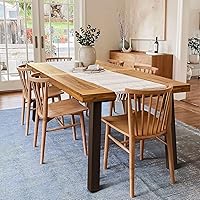
Plank+Beam Classic 72 Inch Solid Wood Dining Table
 Best for adjustable seating
Signature Design by Ashley Extendable Trestle Dining Table, Seats 8
What is the difference between a solid wood and veneer dining table?
A solid wood table uses solid lumber for the parts described as solid wood; a veneer table has a thin wood layer over a different core. The word “veneer” by itself doesn't describe every part of the table.
A dining table may combine materials. The Ashley, for example, uses rubberwood solids and acacia veneer, so its construction includes both solid material and a veneer surface.
For a useful comparison, look at the top, legs and support structure separately. “Wood table” can describe more than one construction, and a wood finish or color doesn't tell you the materials underneath.
Is solid wood always one piece?
No. Solid wood construction can use joined boards or panels instead of a single slab.
The Plank+Beam top has 3 solid wood panels, and its legs are solid wood.
That detail can help set expectations: a solid wood top may have visible joins and natural variation. The table's wirebrush finish adds texture, but the product details don't specify a particular wood grain pattern or how much variation you'll see.
What does veneer mean on a dining table?
Veneer is a thin layer of wood applied to a core made from another material. It can provide a real wood surface while the table uses other materials underneath.
The Ashley table pairs acacia veneer with rubberwood solids and engineered wood. If you want to know which part has veneer, check the construction details for the tabletop and base rather than assuming the entire table uses the same material.
Which table construction fits your priorities?
Choose solid wood when the solid lumber construction matters most; choose veneer when its surface and design features fit your needs. Neither label alone tells you how well a table suits your room or routine.
A fixed table can work well if you use the same seating arrangement most days. If you regularly host extra guests, extension leaves may matter more than choosing one material category over another.
When is a solid wood table a good fit?
Solid wood can make sense if you want a tabletop and legs made from solid wood and prefer a table that stays the same size. The Plank+Beam has a 72 x 36 in top and a farmhouse design with a pecan wirebrush finish.
Its clean lines and textured surface suit a room where a visible wood look is part of the plan. The brand describes it as a table for 6, but measure your chairs and room before deciding whether that seating layout works for you.
If you want to compare other solid wood options, see our guide to rated solid wood dining tables. For a wider look at species and their differences, read how to choose the best wood for a kitchen table.
When can a veneer table be the better choice?
Veneer can be a good fit when you want a wood surface and other useful features, such as a table that changes length. The Ashley has two drop-in leaves and can be set to 62, 74 or 86 in long.
That flexibility can help you keep a shorter table for everyday meals and extend it when you need more seating. It also means you should plan for the table's longest length and allow room for chairs and people to move around it.
The Ashley's distressed nutmeg finish and thick planked effect top create a casual rustic look. Its design may suit you if that style and the extendable layout matter more than having a solid wood tabletop.
How should you compare durability and care?
Compare the table's construction and finish, then follow its care directions. “Solid wood” and “veneer” don't by themselves tell you how a top will handle spills, scratches or heat.
Both tables have wood-based construction, but their finishes differ. The Plank+Beam has a wirebrush finish, while the Ashley has a distressed nutmeg finish and a planked effect top.
Use coasters and placemats to limit contact with moisture, hot dishes and rough objects. Wipe spills promptly with a soft cloth, and avoid harsh cleaners unless the maker says they're safe for that finish.
A veneer surface needs extra care if the top is damaged: sanding too deeply may cut through the thin wood layer. Don't assume a veneer top can be sanded as freely as a thick solid wood top.
For practical steps, see how to protect a wood dining table from daily wear and our guide to the best finish for a dining table top.
Which table works better in a dining room?
Pick the table that fits your room at its full working size, including chairs and walking space. The Plank+Beam is 72 in long, while the Ashley can extend to 86 in.
The Plank+Beam measures 72 x 36 x 30 in. Its length stays fixed, so consider whether it fits your usual seating setup without crowding nearby furniture.
The Ashley is 62 in long without leaves, 74 in with one leaf and 86 in with both. Measure at the longest setting if you plan to host, then check whether chairs can slide out and people can pass behind them.
Table length is only one part of room fit. Use our guide to how much space to leave around a dining table to plan clearance for chairs and walkways.
What if you need a table for everyday meals and guests?
An extendable table can suit a household whose seating needs change. Keep it at 62 in for everyday use, then add a leaf when you need the 74 in setting or both leaves for 86 in.
A fixed 72 in table avoids changing the length, but it occupies that same length every day. Think about how often you host and whether you have a convenient place to store or handle leaves when they aren't in use.
How do the 2 tables compare?
The Plank+Beam is the solid wood choice, while the Ashley offers veneer construction with adjustable length. Their best fit depends on whether you value fixed solid wood construction or extra seating flexibility.
| Feature | Plank+Beam Classic | Ashley Extendable |
|---|---|---|
| Main construction | 3 solid wood panels and solid wood legs | Rubberwood solids and acacia veneer |
| Length | 72 in | 62, 74 or 86 in |
| Width | 36 in | 36 in |
| Height | 30 in | 30.13 in |
| Seating | Described as seating for 6 | Up to 8 with leaves |
The Plank+Beam's solid wood panels and legs make its construction easy to understand. It also has a fixed length, which can be simpler if you want the same dining layout day to day.
The Ashley's material mix doesn't make it a solid wood top, but the two leaves offer more seating choices. It may be the better match if a table that grows for gatherings solves a real space problem for you.
Which one should you choose?
Choose the Plank+Beam if you want a 72 in table with solid wood panels and legs. Choose the Ashley if you want an acacia veneer surface and the option to extend the table to 86 in.
Before you decide, measure your room with chairs pulled out and compare the full dimensions with your usual walking paths. For more on material choices, browse our solid wood dining table guide and wood options for kitchen tables.
Frequently asked questions
What is the main difference between solid wood and veneer?
Solid wood is made from solid lumber through the relevant piece, while veneer is a thin wood surface attached to a core made from another material. A veneered table can still include solid wood in its frame or legs, so check the top and base construction separately.
Can you refinish a veneer dining table?
Sometimes, but veneer is a thin surface, so deep sanding can cut through it and expose the core. Check the maker's care guidance before sanding or refinishing.
For small wear, use a repair method suited to the finish and veneer rather than treating the top like thick solid lumber.
Is a solid wood dining table always better?
No. Solid wood suits shoppers who want a table built from solid lumber, while veneer can suit buyers who value a wood surface and features such as extension leaves.
Compare construction, dimensions, finish and care needs against how you'll use the table.
Does veneer mean the whole table is made from veneer?
No. Veneer describes a thin wood layer over a core, and a table can combine veneer with solid wood or engineered wood in other parts.
Check the top, legs and support structure separately to understand what each part is made from.