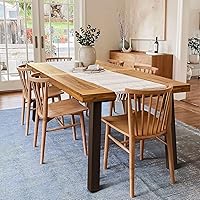
Best Wood for a Kitchen Table: Oak, Acacia and More
The best wood for a kitchen table depends on your priorities: oak is a familiar hardwood choice, acacia has varied grain, and pine can suit a lighter, more rustic look. Compare the wood, finish and care needs before choosing.
On this page (8 sections)
- Which wood is best for a kitchen table?
- Is oak a good choice for a kitchen table?
- Is acacia a good wood for a kitchen table?
- Does pine work for a kitchen table?
- What about walnut and rubberwood?
- How should you compare table wood and finish?
- How do you care for a wooden kitchen table?
- Which wood should you choose for a kitchen table?
The best wood for a kitchen table depends on your priorities: oak is a familiar hardwood choice, acacia has varied grain, and pine can suit a lighter, more rustic look. Compare the wood, finish and care needs before you choose.
A table's construction matters alongside its wood. Solid wood, veneer and mixed materials can look similar at a glance, but they differ in how they're made and cared for.
This guide compares common choices and shows how to match them to your room and routine. For the broader decision, start with how to choose a dining table.
Which wood is best for a kitchen table?
Oak, acacia, pine, walnut and rubberwood each suit different tastes and routines. The right choice depends on the look you want, the table's construction and the care instructions for its finish.
| Wood | What to consider | A good fit if you want |
|---|---|---|
| Oak | Visible grain and a familiar hardwood look | A classic, substantial style |
| Acacia | Varied natural grain and color | A distinctive wood pattern |
| Pine | A lighter, rustic appearance | A casual farmhouse look |
| Walnut | Deep brown tones | A darker, refined finish |
| Rubberwood | A wood option used in furniture, including parawood tables | A practical alternative to more familiar species |
These are broad comparisons, not guarantees about every table. Finish, construction and daily care also affect how a specific surface looks over time.
For more on construction, compare solid wood and veneer dining tables.
Is oak a good choice for a kitchen table?
Oak suits shoppers who want a familiar wood grain and a classic look. Check the table's construction and finish, since an oak label alone doesn't tell you how the whole piece is built.
Oak is often chosen for furniture because of its distinct grain and traditional appearance. Grain and color can vary, so look at the particular table's photos and finish description before deciding whether it fits your room.
For daily use, protect the surface with coasters and placemats, and clean it according to the care directions. Read our guide to choosing a dining table finish if you are comparing surface protection.
Is acacia a good wood for a kitchen table?
Acacia is a good fit if you like natural grain and want a table made with acacia wood. Check the finish and care instructions too, because those details affect how you maintain the tabletop.
The Devoko 6-Person Acacia Wood Dining Table has a solid acacia tabletop and painted steel legs. Devoko says the tabletop is treated for easier cleaning and recommends covering and oiling it if left outdoors for a long time.
Acacia grain and color can vary from piece to piece. If you like this material, see our guide to whether acacia wood works for dining tables.
Does pine work for a kitchen table?
Pine can work well if you want a light, rustic look and prefer its visible grain. Check the finish and care guidance, and consider how the table will be used each day.
Pine is a softwood, so avoid assuming every pine table will respond like a hardwood table. A finish can change the surface's appearance and care needs, while table construction affects stability.
The Plank+Beam Classic 72 Inch Solid Wood Dining Table is made with solid pine panels and legs. Its wirebrush finish adds texture, and the maker describes it as a farmhouse-style table.
The table measures 72 x 36 x 30 in, so measure your room and walking space before choosing it. If you want a more compact table, compare kitchen tables for small spaces.
What about walnut and rubberwood?
Walnut and rubberwood are worth comparing when their look or construction fits your priorities. Walnut offers a darker color, while rubberwood, also called parawood in some furniture descriptions, is used for solid wood furniture.
The Winsome Shaye Solid Wood Dining Table has a walnut finish and a softly curved tabletop profile. Its listed dimensions are about 47 x 30 x 29 in, which may suit a smaller dining area.
International Concepts makes a 42 in round drop-leaf pedestal table from parawood. Its two drop leaves let you adjust the tabletop footprint, which can help when kitchen space is limited.
For a closer look at round tables and their room fit, read round vs rectangle dining tables.
How should you compare table wood and finish?
Compare the wood, construction and finish as a set. A wood name by itself doesn't tell you the full care routine or how the surface will suit your household.
Before you choose, check:
- Construction: Is the table solid wood, veneer or a mix?
- Finish: Is it painted, stained, oiled or textured?
- Care: What does the maker recommend for spills and regular cleaning?
- Room fit: Do the shape and dimensions leave enough room for chairs and walking?
- Use: Will the table see meals, work, crafts or all three?
For example, a large pine table with a textured finish makes a different room statement from a compact walnut-finish table. Pick based on the actual table and your daily needs, rather than relying on a single wood label.
How do you care for a wooden kitchen table?
Protect the finish with prompt spill cleanup and simple daily habits. Follow the care directions for your table, since finishes may need different treatment.
Use coasters under drinks and placemats beneath hot dishes. Avoid leaving wet cloths, standing water or harsh cleaners on the surface unless the care instructions allow them.
Clean with a soft cloth and a suitable cleaner. Our guides explain how to clean a wood dining table and how to protect a wood dining table from daily wear.
Which wood should you choose for a kitchen table?
Choose the wood and finish that suit your room, your preferred look and the care you can keep up with. Oak offers a familiar grain, acacia a distinctive pattern, pine a rustic style, walnut a darker finish, and rubberwood another solid wood option.
If you prefer a rustic table, consider the solid pine Plank+Beam. If you want acacia, compare the Devoko's solid acacia top and steel legs; for a compact footprint, consider the walnut-finish Winsome or the drop-leaf International Concepts table.
Next, compare solid wood and veneer tables and measure your space before choosing a shape.
Frequently asked questions
What is the best wood for a kitchen table?
The best wood depends on your priorities. Oak is a familiar hardwood choice, acacia has varied grain, and pine can suit a lighter, rustic look.
Compare the table's construction and finish, then consider how much daily care you're willing to give it.
Is acacia wood good for a kitchen table?
Acacia can suit a kitchen table if you like its natural grain and are comfortable following care directions for the finish. For example, Devoko describes its acacia tabletop as treated to resist corrosion and easy to wipe clean.
See our guide to acacia wood dining tables for more.
Is solid wood better than veneer for a dining table?
Solid wood and veneer suit different priorities. Solid wood has wood throughout the piece, while veneer uses a thin wood layer over a core material.
Compare construction, finish and care needs for the table you're considering; our solid wood vs veneer guide explains the trade-offs.
How do you protect a wood kitchen table?
Wipe spills promptly, use coasters and placemats, and follow the care directions for the table's finish. Heat, moisture and rough items can mark a wood surface.
For more practical steps, see our guide to protecting a wood dining table.